How to pet-proof your garden

Make your garden a safer place for pets to play, explore and relax. Learn how to spot common hazards and help prevent accidents and unexpected vet bills.

Published: 15 July 2026
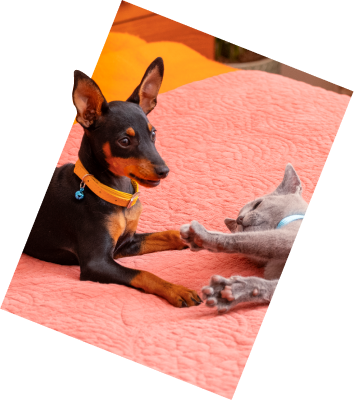
A cat reaching out to play with a small dog on a bed in a bedroom.

What makes a garden dangerous for pets?

Gardens contain more hazards than most owners realise. The good news is that most risks are easy to address once you know what to look for.

The most common garden dangers for dogs and cats include:

  • Toxic plants, including many popular UK garden flowers and shrubs.Toxic plants, including many popular UK garden flowers and shrubs.
  • Slug pellets, weedkillers, and lawn treatments.Slug pellets, weedkillers, and lawn treatments.
  • Compost bins that harbour harmful bacteria and fungi.Compost bins that harbour harmful bacteria and fungi.
  • Gaps, loose panels, or low sections in fencing.Gaps, loose panels, or low sections in fencing.
  • Ponds, water features, and uncovered pools.Ponds, water features, and uncovered pools.
  • Garden tools and machinery left within reach.Garden tools and machinery left within reach.

Top tip – a little spring cleaning

Many pet insurance claims during summer months relate to pets ingesting toxic substances or garden injuries. Taking a little time in the spring to check your outdoor space could prevent a stressful and costly trip to the vet.

    Which plants are safe for dogs and cats?

    Choosing pet-friendly plants is the single most effective thing you can do for a safer garden. Many beautiful plants are naturally non-toxic and work just as well in UK borders and containers.

      Pet-friendly plants to consider

      • Snapdragons (antirrhinum) – colourful, robust, and safe for dogs and cats.Snapdragons (antirrhinum) – colourful, robust, and safe for dogs and cats.
      • Roses – the petals and leaves are non-toxic, though thorns can scratch curious noses.Roses – the petals and leaves are non-toxic, though thorns can scratch curious noses.
      • Sunflowers – cheerful, tall, and completely safe.Sunflowers – cheerful, tall, and completely safe.
      • Lavender – calming for humans, and non-toxic to pets in small amounts.Lavender – calming for humans, and non-toxic to pets in small amounts.
      • Marigolds (calendula) – safe and useful as a natural pest deterrent.Marigolds (calendula) – safe and useful as a natural pest deterrent.
      • Camellias – popular in UK gardens and non-toxic to both dogs and cats.Camellias – popular in UK gardens and non-toxic to both dogs and cats.

      Plants to avoid

      Foxglove, lily of the valley, rhododendron, azalea, yew, and daffodil bulbs are all toxic to dogs and cats. Lilies in particular are extremely dangerous to cats – even small amounts of pollen can cause kidney failure. If you’re unsure whether a plant is safe, check the Dogs Trust toxic items for dogs or Cats Protection dangerous plant list, or ask your vet.

        If you’re redesigning a border or buying new plants, look for 'pet-friendly gardening' ranges in garden centres, or ask staff before you buy. This small step makes dog-friendly gardening much simpler.

          How do I make a dog-proof fence?

          A dog-proof fence keeps your pet in and hazards out. For most dogs, a fence needs to be tall enough, secure at ground level, and free from gaps or weak panels.

            Key features of a dog-proof fence

            • Height: most dogs need a fence of at least 1.8 metres (6 feet) – breeds that jump well may need taller or inward-facing anti-climb features.Height: most dogs need a fence of at least 1.8 metres (6 feet) – breeds that jump well may need taller or inward-facing anti-climb features.
            • Ground-level security: dogs that dig need a gravel border or buried mesh along the fence line to prevent escaping underneath.Ground-level security: dogs that dig need a gravel border or buried mesh along the fence line to prevent escaping underneath.
            • No footholds: close-board or solid panel fencing removes the ability to climb – avoid chain link or trellis that a determined dog can scale.No footholds: close-board or solid panel fencing removes the ability to climb – avoid chain link or trellis that a determined dog can scale.
            • Gate latches: use a self-closing gate with a dog-proof latch your pet cannot nudge open.Gate latches: use a self-closing gate with a dog-proof latch your pet cannot nudge open.
            • Regular checks: walk the perimeter seasonally and after storms, as panels can loosen or warp.Regular checks: walk the perimeter seasonally and after storms, as panels can loosen or warp.

            For cats, a dog-proof fence is not enough – cats can easily clear a standard 1.8 metres fence. Cat-proof garden fences use inward-angled roller or mesh extensions that prevent cats from gaining purchase at the top. These can be fitted to most existing fences.

              Example – a gap becomes an emergency

              A loose fence panel after winter storms left a 20cm gap at the base. A dog could easily squeeze through and out onto a main road. A quick fence check and a replacement panel could easily prevent this.

                Which garden chemicals are dangerous to pets?

                Common garden products can be acutely toxic to dogs and cats. Always read labels and store chemicals securely in a locked shed or cabinet.

                  Products to use with caution – or avoid entirely

                  • Slug pellets containing metaldehyde: highly toxic to dogs – even small quantities can cause seizures. Instead use ferric phosphate-based pellets, which are safer around pets.Slug pellets containing metaldehyde: highly toxic to dogs – even small quantities can cause seizures. Instead use ferric phosphate-based pellets, which are safer around pets.
                  • Weedkillers (glyphosate-based): toxic if ingested – keep pets off treated areas until fully dry, usually at least 24 hours.Weedkillers (glyphosate-based): toxic if ingested – keep pets off treated areas until fully dry, usually at least 24 hours.
                  • Lawn fertilisers and treatments: many contain iron sulphate or other compounds that cause digestive upset – check that treated grass is dry before letting pets back on.Lawn fertilisers and treatments: many contain iron sulphate or other compounds that cause digestive upset – check that treated grass is dry before letting pets back on.
                  • Cocoa shell mulch: this smells appealing to dogs but contains theobromine – the same compound found in chocolate. Use bark chipping or gravel instead.Cocoa shell mulch: this smells appealing to dogs but contains theobromine – the same compound found in chocolate. Use bark chipping or gravel instead.
                  • Pesticide sprays: residue on foliage can be absorbed through paws – rinse treated surfaces if pets are likely to walk across them.Pesticide sprays: residue on foliage can be absorbed through paws – rinse treated surfaces if pets are likely to walk across them.

                  If you think your pet has ingested a toxic substance

                  Contact your vet immediately. Do not wait for symptoms to appear. If possible, take the packaging with you so the vet can identify the active ingredient. The Animal Poison Line (01202 509000) provides specialist advice for a fee.

                    How do I make a garden pond safe for dogs and cats?

                    Ponds and water features are among the most underestimated garden hazards. Dogs and cats can fall in and struggle to climb out. Hot weather also encourages the growth of blue-green algae (cyanobacteria), which is highly toxic to dogs.

                    • Fit a sturdy metal grille or mesh across smaller ponds – purpose-made pond grilles sit just below the surface and are largely invisible.Fit a sturdy metal grille or mesh across smaller ponds – purpose-made pond grilles sit just below the surface and are largely invisible.
                    • Create a gradual sloped exit on one side of any pond so a dog that falls in can get out.Create a gradual sloped exit on one side of any pond so a dog that falls in can get out.
                    • Check ponds regularly for blue-green algae (it looks like a green or blue-green paint spill on the surface) – if you see it, keep pets away and report it to your local council.Check ponds regularly for blue-green algae (it looks like a green or blue-green paint spill on the surface) – if you see it, keep pets away and report it to your local council.
                    • Install a low picket fence or wire border around larger ponds to keep pets at a distance.Install a low picket fence or wire border around larger ponds to keep pets at a distance.
                    • Cover water butts and buckets completely, as pets can fall in and be unable to escape.Cover water butts and buckets completely, as pets can fall in and be unable to escape.

                    What garden design choices reduce risk for pets?

                    Good dog-friendly gardening is about making smart design decisions along with choosing the right plants. A few structural choices significantly reduce the chance of accidents.

                      Paths and surfaces

                      Gravel paths can cut paws, particularly for dogs that run freely outdoors. Smooth paving, lawn, or bark chipping is gentler on pads. Avoid sharp slate chippings in areas where your dog regularly walks or plays.

                        Sheds and outbuildings

                        Keep shed doors closed and locked. Sheds typically store pesticides, sharp tools, antifreeze, and other hazardous products. Antifreeze (ethylene glycol) is especially dangerous – it smells and tastes sweet to pets but causes rapid kidney failure, which is fatal without urgent treatment.

                          Compost bins

                          A compost bin is an invisible hazard. Decomposing organic matter produces mycotoxins – fungal toxins that cause severe neurological symptoms in dogs, including tremors and seizures. Use a lidded bin with a secure latch, and never let dogs root through garden waste.

                            Shade and water

                            In hot weather, make sure shaded areas are available throughout the day as the sun moves. Always leave a bowl of fresh water outdoors. Dogs are particularly prone to heatstroke – if your dog is outside for extended periods, check they’ve not retreated to a spot without airflow.

                              How can I create a pet-safe area in the garden?

                              If a full garden overhaul is not practical, consider creating a defined pet-safe zone – a section of the garden that is clearly enclosed and free from hazards.

                              • Choose an area with good drainage to avoid muddy, damp conditions.Choose an area with good drainage to avoid muddy, damp conditions.
                              • Use a simple fence to separate the pet zone from any flowerbeds containing toxic plants.Use a simple fence to separate the pet zone from any flowerbeds containing toxic plants.
                              • Plant only non-toxic species within the zone – lavender, sunflowers, and marigolds work well.Plant only non-toxic species within the zone – lavender, sunflowers, and marigolds work well.
                              • Lay lawn, bark chipping, or artificial grass for a comfortable, paw-friendly surface.Lay lawn, bark chipping, or artificial grass for a comfortable, paw-friendly surface.
                              • Add a shaded shelter such as a pop-up canopy or permanent awning for hot days.Add a shaded shelter such as a pop-up canopy or permanent awning for hot days.
                              • Keep toys and treats here to encourage your pet to stay within the safe area.Keep toys and treats here to encourage your pet to stay within the safe area.

                              Example - small garden, big improvement

                              A cat owner in a terraced house with a small garden could use raised beds along one wall for flowering plants, install a cat-proof roller barrier along the top of the fence, and lay artificial grass in the remaining space. The whole project could be done in one weekend and cost under £300.

                                Does pet-proofing my garden affect my pet insurance?

                                Pet insurance is designed to help with the unexpected – accidents, illness, and injuries that cannot always be prevented. Reducing garden hazards doesn’t change your policy terms, but it can make a meaningful difference to the likelihood of needing to make a claim.

                                Common claims related to garden incidents include:

                                • Ingestion of toxic plants or garden chemicalsIngestion of toxic plants or garden chemicals
                                • Cuts and lacerations from sharp objects or fencingCuts and lacerations from sharp objects or fencing
                                • Escape injuries – road traffic accidents following a gap in fencingEscape injuries – road traffic accidents following a gap in fencing
                                • Heatstroke following extended time outdoors without shadeHeatstroke following extended time outdoors without shade
                                • Drowning or near-drowning incidents in garden pondsDrowning or near-drowning incidents in garden ponds

                                Preventing these incidents protects your pet's health first and foremost. It also means fewer stressful emergency vet visits and will reduce the risk of you needing to make a claim.

                                  Common garden pet hazards and safer alternatives

                                  Hazard

                                  Risk

                                  Safer alternative

                                  Metaldehyde slug pellets

                                    Seizures, fatal if ingested

                                      Ferric phosphate pellets

                                        Cocoa shell mulch

                                          Theobromine poisoning

                                            Bark chipping or gravel

                                              Lilies (near cats)

                                                Kidney failure

                                                  Roses, sunflowers, snapdragons

                                                    Uncovered pond

                                                      Drowning, algae toxicity

                                                        Grille cover, sloped exit, low barrier

                                                          Open compost bin

                                                            Mycotoxin tremors

                                                              Lidded, latched compost bin

                                                                Weedkiller on lawn

                                                                  Digestive and neurological harm

                                                                    Wait 24 hours before pets go on it or use pet-safe alternatives

                                                                      Chain link fencing

                                                                        Easy to climb or dig under

                                                                          Close-board panels with buried mesh

                                                                            Help for Pet Insurance customers

                                                                            Find out how to manage your policy or make a claim if you have Tesco Pet Insurance.

                                                                            Important information

                                                                            Tesco Pet Insurance is arranged, administered and underwritten by Pinnacle Insurance Ltd.

                                                                            vetfone is provided by Vetsdirect Ltd.

                                                                            You'll find complete details of the cover, monetary limits, exclusions, excesses and terms in our policy documents.

                                                                              Learn more about Pet Insurance

                                                                              Find cover for your four-legged friend and save money with your Clubcard. Choose Lifetime Pet Insurance, Maximum Benefit or Time Limited.

                                                                              Pet insurance guides

                                                                              What food is bad for dogs?

                                                                              Taking pets abroad - what do I need to know?

                                                                              Why is pet insurance important?

                                                                              Dog training tips from The Dogfather

                                                                              Pet insurance for older dogs

                                                                              Dental advice for your dog

                                                                              The pet effect

                                                                              Getting a new pet